




Now this is a book I've had my eye on for a while. It's…
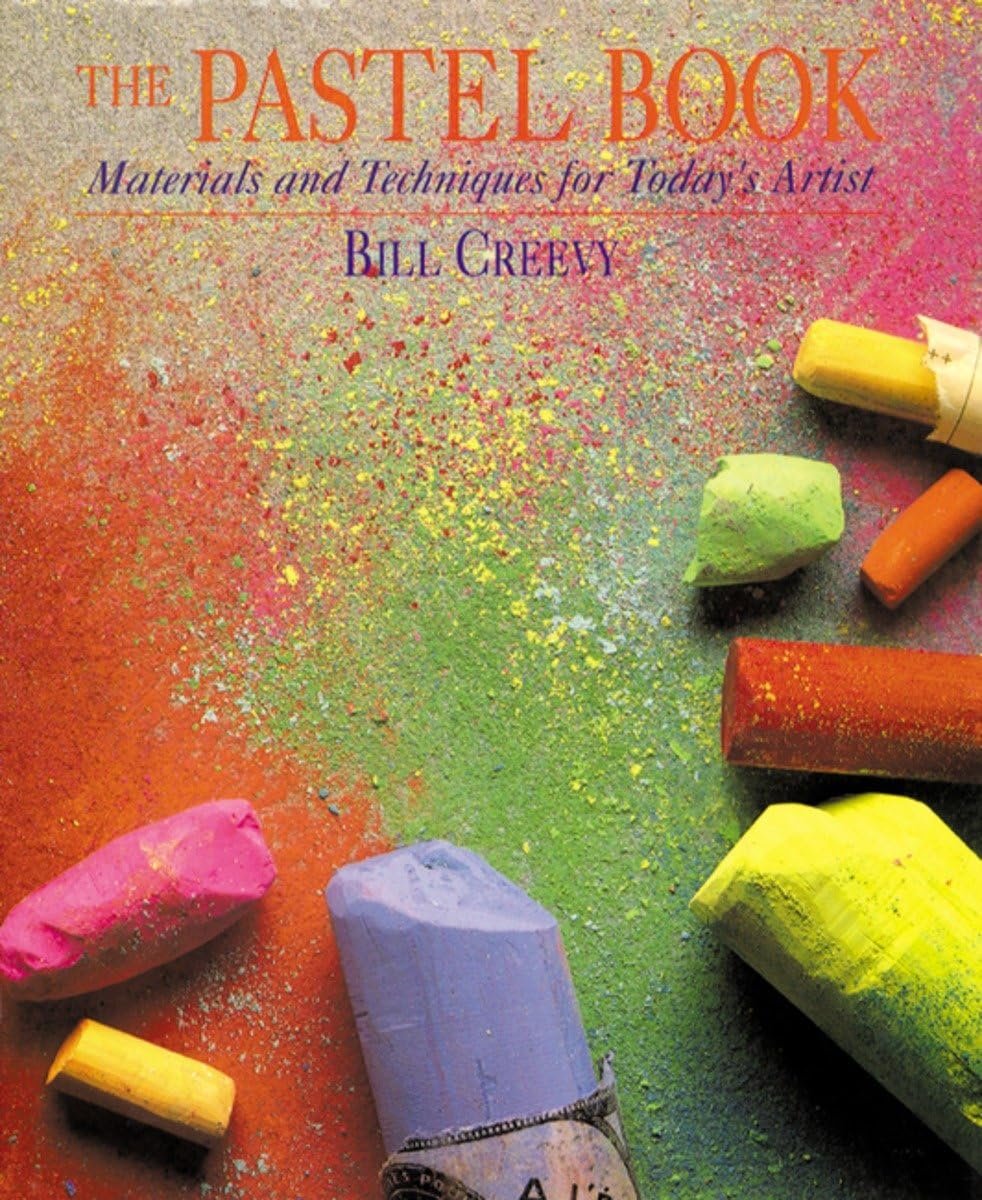
The Pastel Book, Bill Creevy – Book Review
Here’s the third of the three art books I got for Christmas. It’s a 176 page long paperback. I was attracted to it not just by the positive reviews but also because it covered oil pastels as well as soft pastels. I was aware that some parts of the book might be out of date or or little interest to me but enough of the book sounded interesting enough for invite be worthy of a place on my wishlist.
Chapter-wise, we have approximately:
- 10 pages of introduction
- 30 pages on tools and materials
- 30 pages on basic techniques
- 15 pages on textures
- 25 pages on colours
- 25 pages on mixed media
- 20 pages on oil pastels, everything else so far (apart from materials) being focused only on soft pastels
- 20 pages on oil sticks
The tools and materials chapter is out of date in a lot of places and I’d kind of written tibia before I put the book on my wishlist. We have descriptions of all the soft pastels, oil pastels and oil sticks that were available 35 years ago and all their pros and cons. Then we move on to paper, fixatives and other tools. There was a recommendation on a workable fixative in there that I do want to try out, though, and that appears to still be available in 2026. Apparently there’s a difference between “workable fixative” and “final fixative” that I never appreciated until reading this book.
Then we’re on to basic techniques. A brief description of different strokes, then three different ways of starting a painting (with useful demos), something on making corrections and more discussion of fixative (which I’m already starting to sense might be a recurring theme).
The textures chapter is mainly talking about the difference between blended colour and broken colour, the latter referring to multiple stumbled layers of colour with individual colours still visible. I like this style of instruction, presenting us with alternatives and pros and cons: this is also emerging as a common theme. There’s also advice on dusting, creating texture with fixative and on a technique Bill calls feathering.
The colours chapter is made up mainly of well trodden colour theory information, something I’ve read about countless times in other books, including books that are not concerned with pastels. I did pick up some interesting ideas in there, though, about how to use complementary colours and earthy colours, so this wasn’t a wasted chapter.
I skipped the chapter on mixed media. It covers watercolour, acrylics, acrylic gels, Modeling paste, alkyd gels, oil paint, pastel monotypes and gum tragacanth. Nothing of interest to me but there are plenty of ideas here for anyone more Bohemian than me.
Then we get to the oil pastel chapter. I didn’t learn much here, to be honest. And half the chapter was on mixed media (oil pastels with alkyd-based gels and with acrylic medium).
And finally we have the chapter on oil sticks, which sound like hardened sticks of oil paint. Another chapter for me to skip.
What else is there to say? If I don’t count the two chapters I skipped, we’re down from about 175 pages to about 130, still just about respectable. There are plenty of demos throughout the book. Not the sort of demos that someone could follow to recreate the reworks but the sort of demos that highlight the particular techniques they were included to illustrate and, as you can probably guess, that’s fine by me.
Did I learn anything though? Well, yes:
- Bill’s approach to painting with soft pastels is different to mine. We both like to apply lots of thin layers of colour but, whereas I apply them fairly evenly, allowing them to blend, Bill uses more scumbly strokes, taking advantage of the paper texture to get a broken colour effect. It’s a different way of doing things and something I should try. And actually, looking at other pastel books, Bill and I seem to be at opposite extremes, with other artists lying somewhere in between. So, yes, I need try out the broken colour approach.
- I wasn’t aware before reading this book of the existence of workable fixative. I thought fixative was something to spray on at the end for presentation purposes but I’m reading in this book about the danger of multiple layers of colour mixing to produce mud. And about how a layer of workable fixative between every couple of layers of colour can stop the muddy blending and allow individual colours to retain their identity.
- A minor point in comparison but I might try sprinkling pastel dust on my paintings, now that I’ve seen a couple of ways of making the dust stay on the paper.
So I learned a few new things about soft pastels. Nothing about oil pastels, though. And there were largish chunks of the book on other media that didn’t interest me. But there was enough there for the book to be worth buying, making it worthy of at least three palettes. Was it worth a fourth? Looking at the list of books that I’ve awarded four palettes to, I see books that I still feel excited to pick off the shelf. It felt painful to only award these books four palettes and not five. Bill’s book, while definitely worth the money, doesn’t excite me as much, is nowhere near five palettes, so is going to have to settle for three palettes (still a great score). If I was into mixed media or oil sticks, I expect I’d be scoring this book even more highly, so if that’s your sort of thing, do check this one out.
Oh and, needless to say, Brindley still stands supreme as the best introduction to soft pastels.
🎨🎨🎨
You can find this book and more reviews of it at Amazon UK here. As an Amazon Associate, I earn commission from qualifying purchases but this costs absolutely nothing extra to you.
Leave a Reply