




Not a Christmas present, this one. It's a book I've been after a while and…
Painting What You Want To See, Charles Reid – Book Review
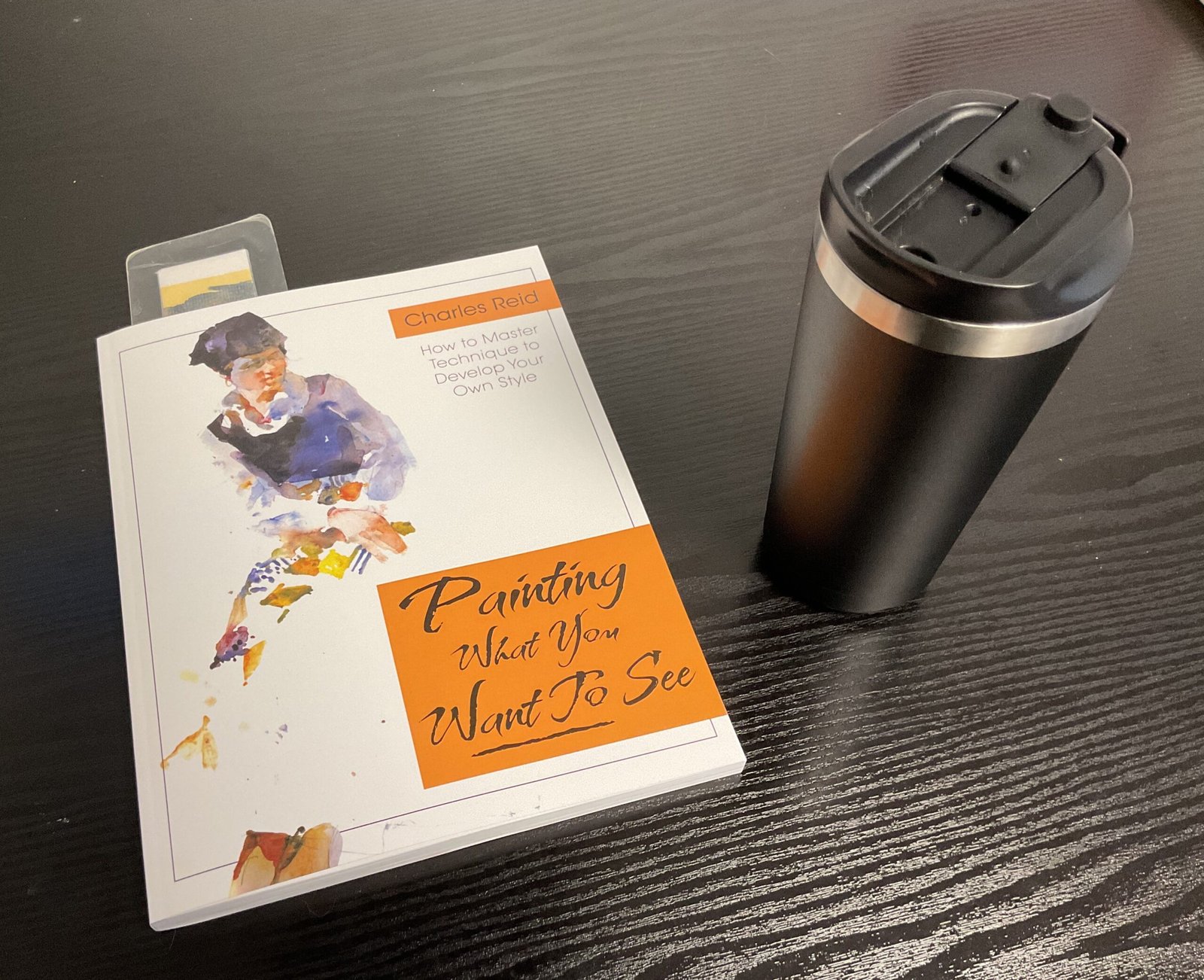
And here’s yet another book review. This wasn’t a Christmas present – just a book that suddenly became available brand new at a sensible price on Amazon for the first time in years. I think this was just before Christmas. I was planning on leaving it another week before reading and reviewing this one but couldn’t resist taking a small peek last night and I was hooked because Charles Reid is the most readable art instruction author out there. His words just glide off the page like honey.
Anyway, on to the book. It’s a 144 page paperback. Contents-wise, we have:
- about 20 pages of introduction and reviewing the basics
- about 20 pages on values
- about 45 pages on colour
- about 35 pages on composition
- about 20 pages on lessons from examples of others’ paintings
The opening chapter includes the usual Charles Reid introduction to contour drawing, a much shorter section than in his other books. The explanation of contour drawing in Pulling Your Paintings Together is still the best explanation I’ve seen. But then we also have an introduction to monotone, values-based paintings that included useful tips.
Then we’re on to the chapter on values. Lots of compositional stuff on how to arrange values on the painting. But also stuff on how to decide what value to allocate to different bits of the painting. There was a very weird tip here, saying that the lightest areas of the things with the darkest local colour should be darker than the darkest, most shadowy bits of the things with the lightest local colour. I’m not sure I agree with this! This chapter closes with advice on painting in high and low key (that’s with light or dark values dominating the painting).
Then there’s a huge chapter on colour. As usual, Charles includes advice on mixing greens, greys, darks, flesh tones, etc with both oils and watercolour. I’ve seen all that before. And he doesn’t have much new to say about painting with analogous colours or with complementaries. There’s some very useful stuff on colouring shadows though. And there’s a big message coming through in this chapter telling us to make more use of local colours. Highlights need a bit of local colour rather than being just white, darks need to be darker mixes of local colour. It’s another idea that I’m not keen on, but maybe that’s just me. I like to let the values create the image and the colours set the mood. If I’m ever doing something exciting with colours, it’s adding in non-local colours either as reflected light or from my personal impressions. I think only experienced artists should be reading this book, people who can take advice on board but who have developed enough awareness to be able to reject it if they don’t trust it. Talking of which, in the section on mixing darks in oil paint, Charles says that if he doesn’t want any colour hints in his darks, he’ll just use ivory black. I don’t know anything about oils but I can tell you that I’d be giving a serious side eye to anyone using a neat black in watercolour.
The chapter on composition is a good one. There’s a lot of good advice here on linking the subject to the background, tying other things together, repeating themes across the painting and changing light values to dark and vice versa if this helps the composition. The chapter’s called Painting What You Want To See but feels more like it should be named after another book, Pulling Your Paintings Together.
We conclude the book with two chapters, one with lessons from Charles’ students’ paintings and one with lessons from the masters. In both cases we’re presented with paintings and lessons. It’s like a test at the end of the book to see how much we’ve learned and, let me tell you, it’s a tough test. It’s hard to spot the things that Charles will identify but once he tells us, they seem obvious.
So that was the book. A delightful read as usual, but a challenging one too. This is a book for experienced artists and one that beginners should stay well away from, not just because of the questionable (IMHO) advice in some places but also because this is about little compositional and planning tweaks that turn good artists into great ones. There are no demos in the book and I didn’t miss them. Quelle surprise! I’m not sure the name of the book or the byline on the cover (how to master technique to develop your own style) are a great indication of what’s inside: this one fails the snakes on a plane test. As a book on composition, I think it works and is better organized than Pulling Your Paintings Together. Better enough to be worth a fourth palette? I think so. Charles’ voice and writing style is enough to tip it over. But it comes with a warning that this is a book for experienced artists, definitely not for beginners.
⚠️ Warning! 🎨🎨🎨🎨 Danger! ⚠️
You can find this book and more reviews of it at Amazon UK here. As an Amazon Associate, I earn commission from qualifying purchases but this costs absolutely nothing extra to you
Leave a Reply